Estate planning is a crucial step in securing your family’s future. At the law firm of Barbara M. Pizzolato P.A, we understand that this process can be overwhelming, but we’re here to guide you through it.
Protecting your wealth and legacy is essential, and we’re committed to helping you achieve peace of mind. By addressing common questions and concerns, we empower you to make informed decisions about your estate plan.
Our mission is to provide clarity and education throughout the estate planning process. In this article, we’ll explore the top FAQs to consider when creating your estate plan in Lee County, FL.
Key Takeaways
- Understand the importance of estate planning in securing your family’s future.
- Learn how to protect your wealth and legacy.
- Discover the key elements of an effective estate plan.
- Get insights into the estate planning process in Lee County, FL.
- Find out how Dorcey Law Firm can guide you through estate planning.
What Is Estate Planning and Why Is It Important?
Understanding estate planning is essential for protecting your assets and loved ones. Estate planning is not just about writing a will; it’s a comprehensive approach to organizing your wealth, managing tax exposure, and ensuring the smooth transfer of assets to future generations.
Overview of Estate Planning
A basic estate plan generally consists of four key documents: a will, a revocable trust, a health care power of attorney, and a property power of attorney. These documents work together to provide a clear direction for the distribution of your assets and the care of your dependents.
We recommend that individuals in Lee County, FL, consider their unique circumstances when creating an estate plan. Working with an experienced estate planning attorney Lee County FL can help ensure that your plan is tailored to your specific needs and goals.
- A will outlines how your assets should be distributed after your passing.
- A revocable trust can help manage your assets during your lifetime and avoid probate.
- A health care power of attorney designates someone to make medical decisions on your behalf.
- A property power of attorney grants authority to manage your financial affairs.
Common Misconceptions About Estate Planning
One common misconception is that estate planning is only for the wealthy. However, regardless of your net worth, having a plan in place can provide peace of mind and protect your family’s financial future. Another misconception is that estate planning is a one-time task; in reality, it’s an ongoing process that should be reviewed and updated as your circumstances change.
By understanding the basics of estate planning and working with a knowledgeable estate planning services Lee County provider, you can create a plan that meets your needs and provides for your loved ones.
Key Documents in an Estate Plan
In Lee County, Florida, a thorough estate plan encompasses several critical documents that help ensure your wishes are carried out and your loved ones are protected.
A comprehensive estate plan is built around several key documents, each serving a unique purpose. We will explore two crucial aspects: the differences between wills and trusts, and the importance of powers of attorney and medical directives.
Wills Versus Trusts: What’s the Difference?
A will outlines how your assets should be distributed after your passing. It provides a clear direction for the distribution of your estate according to your wishes.
A trust, on the other hand, provides more control over when and how those assets are distributed. Trusts can be particularly useful for managing assets for minor children or beneficiaries who may not be ready to manage their inheritance.
- A will goes into effect after your passing, while a trust can be effective immediately or at a specified future date.
- Wills are subject to probate, whereas trusts can help avoid this often lengthy and costly process.
Powers of Attorney and Medical Directives
Powers of attorney and medical directives are essential for ensuring your wishes are respected in case of incapacity. A power of attorney grants someone the authority to make financial decisions on your behalf, while a medical directive outlines your healthcare preferences.
These documents are critical for:
- Ensuring your financial and medical wishes are respected.
- Providing a clear direction for your loved ones during difficult times.
- Avoiding potential conflicts among family members.
By understanding and incorporating these key documents into your estate plan, you can ensure that your legacy is protected and your loved ones are cared for according to your wishes.
How to Choose an Estate Planning Attorney in Lee County
Finding an experienced estate planning attorney in Lee County is essential for creating a comprehensive estate plan. We understand that selecting the right attorney can be a daunting task, but with the right guidance, you can make an informed decision.
Qualities to Look for in an Attorney
When searching for the best estate planning lawyer in Lee County FL, there are several qualities to consider:
- Experience with high net worth estate plans
- Familiarity with Florida-specific laws and regulations
- Credentials such as Certified Estate Planning Specialist (CEPS)
- A strong track record of successful estate plans
- Excellent communication and interpersonal skills
An attorney with these qualities will be well-equipped to handle your estate planning needs and provide you with peace of mind.

Questions to Ask During Your Consultation
Once you’ve identified potential estate planning attorneys, it’s crucial to ask the right questions during your consultation. Here are some key questions to consider:
- What experience do you have with estate plans similar to mine?
- How will you help me achieve my estate planning goals?
- What are the potential costs associated with creating and maintaining my estate plan?
- How will you keep me informed throughout the estate planning process?
- What happens if I need to make changes to my estate plan in the future?
By asking these questions, you’ll be able to assess whether the attorney is the right fit for your needs and ensure that you’re working with a professional who can provide you with a tailored estate plan.
We recommend taking notes during your consultation and following up with any additional questions you may have. By doing so, you’ll be well on your way to creating a comprehensive estate plan that protects your legacy.
Understanding Florida’s Probate Process
When it comes to managing the estate of a loved one, understanding Florida’s probate process is crucial. Probate is the legal process by which a deceased person’s estate is administered and distributed among their heirs. It involves validating the will, if there is one, and ensuring that all debts and taxes are paid before the remaining assets are distributed.
What is Probate?
Probate is a court-supervised process that ensures the deceased person’s estate is handled according to their wishes as outlined in their will. If there is no will, the estate is distributed according to Florida’s intestacy laws. The probate process involves several key steps, including:
- Validating the will
- Appointing a personal representative
- Inventorying the estate’s assets
- Paying debts and taxes
- Distributing the remaining assets to beneficiaries
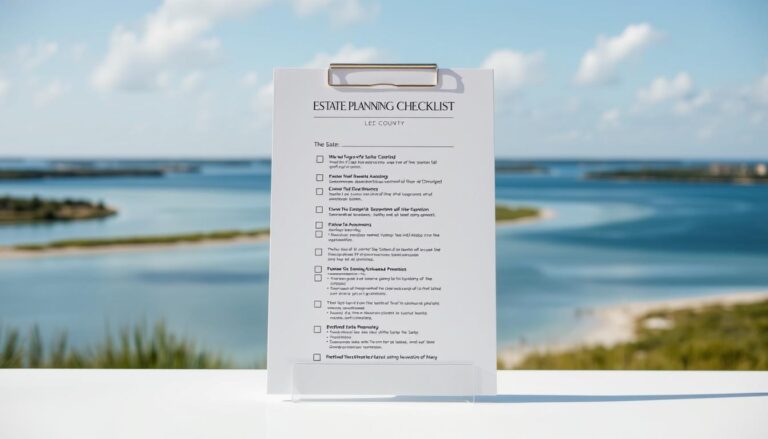
For those undergoing this process, having an estate planning checklist Lee County FL can be invaluable in ensuring all necessary steps are taken.
Timeframes and Costs Associated with Probate
The duration and cost of probate can vary significantly depending on the complexity of the estate and whether there are any disputes among beneficiaries. Generally, the probate process in Florida can take anywhere from a few months to a couple of years.
| Factors Affecting Probate | Typical Timeframe | Estimated Costs |
|---|---|---|
| Simple Estates (No disputes, clear will) | 6-9 months | $2,000 – $5,000 |
| Complex Estates (Disputes, multiple assets) | 1-2 years | $5,000 – $15,000+ |
Understanding these factors can help you plan your estate more effectively and potentially minimize the time and costs associated with probate. We recommend consulting with an experienced estate planning attorney in Lee County to navigate this complex process and ensure your estate is handled according to your wishes.
Estate Taxes: What You Need to Know
Estate taxes can significantly impact the legacy you leave for your loved ones. As you plan your estate with the help of estate planning services Lee County, understanding these taxes is crucial.
While Florida does not impose a state estate tax, federal estate taxes can still affect your estate. It’s essential to grasp the differences between federal and state estate taxes to minimize your tax liability effectively.
Federal vs. State Estate Taxes
The United States has a federal estate tax system, which applies to estates above a certain threshold. As of the current year, estates valued below this threshold are not subject to federal estate tax. However, estates exceeding this threshold are taxed on the amount above the threshold.
Florida, like many other states, does not have a state estate tax. This means that regardless of the size of your estate, you won’t have to pay estate taxes at the state level. However, if your estate is subject to federal estate tax, you’ll need to comply with federal regulations.
| Estate Value | Federal Estate Tax Rate |
|---|---|
| $0 to $11,700,000 | 0% |
| $11,700,001 to $13,610,000 | 18% |
| $13,610,001 and above | 40% |
Tax Planning Strategies
To minimize estate tax liability, several tax planning strategies can be employed. Using an estate planning checklist Lee County FL can help ensure you’re taking advantage of all available strategies.
- Gifting: Gifting assets to beneficiaries during your lifetime can reduce the size of your estate, thus lowering potential estate taxes.
- Trusts: Establishing trusts can help protect your assets and reduce estate taxes. Irrevocable trusts, in particular, can be effective in minimizing tax liability.
- Charitable Donations: Making charitable donations can reduce the value of your estate and provide a tax deduction.
By understanding federal estate taxes and employing effective tax planning strategies, you can protect your estate and ensure that your loved ones receive the maximum benefit from your legacy.

How to Protect Your Assets
Effective asset protection requires a thoughtful approach to estate planning, ensuring that your legacy is preserved. As you consider your estate plan, it’s crucial to understand the strategies available to safeguard your wealth.
Use of Trusts for Asset Protection
Trusts are a powerful tool in asset protection, allowing you to shield your assets from creditors and lawsuits. By transferring assets into a trust, you can create a layer of protection that helps preserve your wealth for your beneficiaries. We recommend consulting with a wills and trusts lawyer in Lee County, Florida to determine the most suitable trust structure for your needs.
There are various types of trusts that can be used for asset protection, including irrevocable trusts and offshore trusts. Each type has its benefits and considerations, and a professional can help you navigate these options.

The Role of Insurance in Estate Planning
In addition to trusts, insurance solutions play a vital role in asset protection. Umbrella insurance policies and life insurance can provide a financial safety net, protecting your assets from unforeseen events. We can help you assess your insurance needs as part of your comprehensive estate plan.
Insurance can also help mitigate risks associated with lawsuits and creditor claims. By incorporating insurance into your estate plan, you can add an extra layer of protection for your assets.
By combining trusts and insurance strategies, you can create a robust asset protection plan. We are committed to helping you protect your legacy through education and personalized estate planning services in Lee County.
Planning for Minor Children
For families with young children, estate planning is not just about distributing assets; it’s about securing their children’s future. As parents, we want to ensure that our minor children are protected and provided for, no matter what the future holds. This involves making crucial decisions about their care and financial security.
Guardianship Considerations
One of the most significant decisions parents must make is choosing a guardian for their minor children. This person will be responsible for their daily care, education, and well-being if something happens to the parents. When selecting a guardian, consider someone who shares your values and parenting style. It’s also essential to discuss this responsibility with the potential guardian to ensure they are willing and able to take on this role.
Here are some factors to consider when choosing a guardian:
- Their ability to provide a stable and loving environment
- Their geographical location and its impact on the children’s continuity of life
- Their financial stability and ability to manage additional responsibilities
- Their age and health status
As stated by a legal expert, “Choosing a guardian is a personal decision that requires careful consideration of the potential guardian’s ability to provide for the children’s needs.” It’s a decision that should not be taken lightly.
Setting Up Trusts for Minors
Setting up a trust for minor children can provide them with financial security until they are old enough to manage their inheritance. Trusts can be tailored to meet the specific needs of the children, such as funding their education or providing for their health needs.
| Trust Type | Description | Benefits |
|---|---|---|
| Revocable Trust | Can be altered or terminated during the grantor’s lifetime | Flexibility, avoids probate |
| Irrevocable Trust | Cannot be changed once it’s established | Tax benefits, asset protection |
It’s crucial to work with an experienced estate planning attorney in Lee County, FL, to set up a trust that meets your family’s needs. They can guide you through the process and ensure that your children’s interests are protected.
By carefully planning for the care and financial security of your minor children, you can have peace of mind knowing that they will be well taken care of, no matter what the future holds.
Digital Assets and Estate Planning
In today’s digital age, it’s essential to understand how digital assets fit into your overall estate plan. As we continue to live more of our lives online, the importance of digital assets in estate planning cannot be overstated.
Understanding Digital Assets
Digital assets refer to any digital content or accounts that have value or utility. This can include:
- Social media accounts
- Cryptocurrencies and digital wallets
- Online banking and financial accounts
- Digital photos and videos stored online
- Domain names and websites
These assets are becoming increasingly important, not just financially but also sentimentally. It’s crucial to consider how these assets will be managed after you’re gone.
Including Digital Assets in Your Estate Plan
To ensure that your digital assets are managed according to your wishes, you need to include them in your estate plan. Here are some steps to take:
- Inventory Your Digital Assets: Make a list of all your digital assets, including account names and passwords.
- Decide on Distribution: Determine who you want to inherit or manage your digital assets.
- Use Digital Estate Planning Tools: Some platforms offer tools for managing digital assets after death.
- Consult with an Estate Planning Attorney: An attorney can help you navigate the complex landscape of digital assets. For expert guidance, consider consulting with professionals from Dorcey Law.
Here’s a simple table to help you organize your digital assets:
| Digital Asset | Account Name | Password | Instructions for Management |
|---|---|---|---|
| Social Media | [email protected] | password123 | Delete account |
| Cryptocurrency | CryptoWallet | privatekey123 | Transfer to beneficiary |
| Online Banking | bankinguser | bankingpassword | Close account |
By taking these steps, you can ensure that your digital legacy is managed according to your wishes, providing peace of mind for you and your loved ones.
Updating Your Estate Plan: When and Why
As life unfolds, your estate plan should evolve to reflect changes in your personal and financial circumstances. Estate planning is not a one-time task; it’s an ongoing process that requires periodic reviews and updates to ensure it remains aligned with your current situation and goals.
Life Changes That Trigger Revisions
Significant life events often necessitate changes to your estate plan. Some of these events include:
- Marriage or divorce, which can impact how you want to distribute your assets.
- The birth or adoption of a child, requiring you to make provisions for their care and inheritance.
- Significant changes in your financial situation, such as acquiring or selling a business or substantial assets.
- Changes in your health status or that of your loved ones, which might require adjustments to your medical directives or guardianship arrangements.
For instance, if you’ve recently moved to Lee County, FL, or have been considering consulting with an estate planning attorney Lee County FL, it’s a good opportunity to review your estate plan. Ensuring that your plan is up-to-date can provide peace of mind and protect your family’s future.
Regular Review Recommendations
It’s advisable to review your estate plan every three to five years or whenever a significant life event occurs. Regular reviews help ensure that your estate plan continues to reflect your wishes and remains effective in managing your assets. During these reviews, we recommend examining:
- The beneficiaries listed on your accounts and policies to ensure they are current.
- The terms of your will and trusts to reflect any changes in your family or financial situation.
- Your powers of attorney and medical directives to ensure they are still appropriate.
By keeping your estate plan updated, you can avoid potential complications and ensure that your legacy is protected according to your wishes. Consulting with a best estate planning lawyer in Lee County FL can provide you with the guidance needed to make informed decisions about your estate plan.
“A good plan today is better than a perfect plan tomorrow.” Regularly updating your estate plan is a proactive step towards securing your family’s future.
Resources for Estate Planning in Lee County
Creating a comprehensive estate plan in Lee County, Florida, is easier with the right resources. We have identified several local organizations and online tools to help you navigate the estate planning process.
Local Support
Lee County residents can benefit from various local organizations offering estate planning workshops and seminars. These events provide valuable insights into estate planning services Lee County offers, including guidance on setting up a power of attorney Lee County FL.
Online Guides and Tools
In addition to local support, numerous online resources are available to assist with estate planning. These include interactive tools for creating wills, trusts, and other essential documents. By leveraging these resources, you can ensure that your estate plan is comprehensive and tailored to your needs.
By combining local expertise with online resources, you can create a robust estate plan that protects your legacy and provides peace of mind for you and your loved ones.