Are you aware of how Florida estate planning laws can impact the future of your home and legacy? For many homeowners in Florida, understanding the intricacies of homestead exemption is crucial for effective estate planning.
Florida law provides significant protections for homeowners through its homestead laws, which can affect estate planning and probate processes. Knowing these rules can help ensure that your home is safeguarded for your loved ones.
As we explore the details of Florida’s homestead laws, we’ll examine how these regulations can benefit homeowners and the importance of understanding them for a smooth probate process.
Key Takeaways
- Understanding Florida’s homestead laws is essential for effective estate planning.
- The homestead exemption can significantly impact the probate process.
- Florida law provides substantial protections for homeowners through its homestead laws.
- Knowing these rules can help safeguard your home for your loved ones.
- Proper estate planning can ensure a smooth transfer of your legacy.
Understanding Florida Homestead Law
Understanding the intricacies of Florida’s homestead law is essential for homeowners who wish to safeguard their property and enjoy tax benefits. Florida’s homestead law provides significant protections and benefits to homeowners, making it a crucial aspect of property ownership.
Definition of Homestead
In Florida, a homestead is defined as a primary residence owned by a Florida resident. To qualify for homestead protections, the property must be occupied by the owner as their permanent residence. It’s crucial to understand that the property must be the owner’s primary home to be considered a homestead.
Eligibility Requirements
To be eligible for homestead status, the property owner must meet specific requirements:
- The property must be owned by a Florida resident.
- The owner must occupy the property as their permanent residence.
- The property must be the owner’s primary home.
As stated by the Florida Department of Revenue, “A person who permanently resides on real property owned by that person is entitled to a homestead exemption.” This emphasizes the importance of establishing residency to qualify for homestead benefits.
Benefits of Homestead Status
Homestead status offers several benefits, including:
- Tax Exemptions: Homestead property is eligible for tax exemptions, reducing the overall tax burden on homeowners.
- Creditor Protection: Florida’s homestead law provides protection against creditors, safeguarding the home from forced sale to satisfy debts.
- Inheritance Benefits: Homestead status can simplify the transfer of property upon the owner’s death, potentially reducing the complexity and costs associated with probate.
As noted by legal experts, “Homestead laws in Florida are designed to protect the family home, ensuring that it remains within the family even in times of financial hardship.” This highlights the significance of understanding and leveraging homestead laws for the benefit of homeowners and their families.
The Importance of Homestead in Probate
Florida homeowners need to grasp the concept of homestead and its implications on probate to ensure their homes are safeguarded. The probate process in Florida can be complex, and understanding how homestead status affects this process is crucial for effective estate planning.
Protecting Your Home During Probate
In Florida, homestead property is generally exempt from probate, meaning it cannot be sold to pay off debts unless there are specific exceptions like mortgages or certain tax liens. This exemption provides significant protection for homeowners, ensuring that their primary residence is not at risk during the probate process. To benefit from this protection, it’s essential to establish homestead status before the homeowner’s passing.
During Florida probate administration, the court’s primary role is to oversee the distribution of the deceased’s assets according to their will or Florida law if there’s no will. However, homestead property passes directly to heirs or devisees as designated by Florida law, bypassing the probate estate. This can simplify the process and reduce legal fees.
Homestead’s Role in Estate Planning
Understanding Florida estate planning laws is vital for homeowners who wish to ensure that their property is distributed according to their wishes. By designating a property as a homestead, individuals can protect it from creditors and ensure it passes to their heirs without the need for probate. For comprehensive guidance on incorporating homestead into your estate plan, consider consulting with an experienced estate planning attorney. You can find more information on essential estate planning steps on websites like Pizzolato Law.
Effective estate planning involves considering the role of homestead property and how it fits into your overall strategy. By doing so, you can protect your home and ensure that your estate is distributed according to your wishes, providing peace of mind for you and your loved ones.
Key Florida Probate Rules Explained
The probate process in Florida can be daunting, but knowing the key rules can help simplify the experience for families. Florida probate rules govern the distribution of a deceased person’s estate, and understanding these rules is crucial for a smooth probate process.
Overview of Probate Process
The probate process in Florida involves several steps that are crucial for the legal distribution of a deceased person’s assets. Probate administration begins with filing a petition with the Florida probate court, which then appoints a personal representative to manage the estate.
The personal representative is responsible for gathering the deceased’s assets, paying debts and taxes, and distributing the remaining assets according to the will or Florida law if there is no will.

Types of Probate in Florida
Florida offers different types of probate proceedings depending on the complexity and size of the estate. The main types include:
- Summary Administration: This is a simplified process for smaller estates, typically those valued at $75,000 or less, or if the deceased has been dead for more than two years.
- Formal Administration: This is the standard probate process used for most estates. It involves the appointment of a personal representative and is used for estates that require more complex administration.
- Disposition without Administration: This process is used when the estate’s assets are entirely exempt from creditors’ claims, such as when the assets pass directly to exempt beneficiaries like spouses or heirs.
| Type of Probate | Description | Estate Value/Complexity |
|---|---|---|
| Summary Administration | Simplified process for smaller estates | $75,000 or less, or deceased has been dead for more than two years |
| Formal Administration | Standard probate process for most estates | More complex estates requiring detailed administration |
| Disposition without Administration | Assets pass directly to exempt beneficiaries | Assets are entirely exempt from creditors’ claims |
Understanding the different types of probate in Florida is essential for determining the best approach for managing an estate. By knowing the key Florida probate rules, individuals can better navigate the probate process and ensure that their loved ones are protected.
How Homestead Affects Property Taxes
The impact of homestead status on property taxes is a critical consideration for homeowners looking to minimize their tax liabilities. In Florida, homestead exemptions play a significant role in reducing the property tax burden on eligible homeowners.
Tax Exemptions for Homesteads
Florida offers several tax exemptions to homeowners who qualify for homestead status. The most significant exemption is the homestead exemption, which can exempt up to $50,000 of the assessed value of a homeowner’s primary residence from property taxes. This exemption can lead to substantial savings for homeowners.
To qualify for the homestead exemption, homeowners must meet certain eligibility requirements, including:
- Being a permanent resident of Florida
- Owning the property as their primary residence
- Filing an application with the county property appraiser’s office
Additional Exemptions: Beyond the standard homestead exemption, there are additional exemptions available for certain groups, such as:
- Senior citizens
- Veterans
- Disabled persons
These exemptions can further reduce property tax liabilities.
Impact on Property Assessments
Homestead status not only provides exemptions but also affects how property assessments are conducted. In Florida, the Save Our Homes amendment limits the annual increase in assessed value to 3% or the Consumer Price Index, whichever is lower. This provision helps protect homeowners from rapid increases in property taxes due to rising property values.
Here’s a comparison of how homestead status can impact property assessments and taxes:
| Property Value | Without Homestead | With Homestead |
|---|---|---|
| $200,000 | $2,000 (1% tax rate) | $1,500 (1% tax rate on $150,000 after $50,000 exemption) |
| $300,000 | $3,000 (1% tax rate) | $2,000 (1% tax rate on $250,000 after $50,000 exemption, capped at 3% increase) |
By understanding and leveraging homestead exemptions, Florida homeowners can significantly reduce their property tax obligations. It’s essential for homeowners to consult with their local property appraiser’s office to ensure they are taking full advantage of the available exemptions.
Claiming Homestead Exemption in Florida
To take advantage of the homestead exemption, Florida homeowners must navigate a straightforward application process. Claiming this exemption can lead to significant savings on property taxes, making it an essential step for homeowners looking to reduce their tax burden.
Steps to Apply for Homestead Exemption
Applying for homestead exemption in Florida involves several key steps:
- File an application with the county property appraiser’s office.
- Provide proof of residency, such as a driver’s license or voter registration card.
- Submit documentation showing ownership, like a deed or title.
- Complete the application form, which typically requires basic information about the property and its owner.
Required Documentation: Homeowners should be prepared to provide supporting documents, including proof of residency and property ownership. Ensuring that all documents are in order can help streamline the application process.
Deadlines and Renewal Requirements
It’s crucial for homeowners to be aware of the deadlines associated with claiming homestead exemption. In Florida, the deadline for filing is typically March 1st of each year. Additionally, homeowners should understand that homestead exemption is not a one-time application; it requires renewal or update whenever there is a change in ownership or eligibility status.
Renewal Requirements: While the exemption remains in effect as long as the homeowner continues to meet the eligibility requirements, changes in property ownership or other factors may necessitate an update to the exemption status. Homeowners should review their exemption status annually to ensure it remains in effect.
By following these steps and being mindful of the deadlines, Florida homeowners can successfully claim their homestead exemption and enjoy the associated property tax savings.
Transfer of Homestead Property Upon Death
Understanding how homestead property is transferred upon death is crucial for Florida homeowners, as state laws offer unique safeguards. When a homeowner passes away, the distribution of their homestead property is governed by Florida’s inheritance laws, which provide specific protections for spouses and heirs.
Spousal Rights to Homestead
Florida law grants significant rights to the surviving spouse regarding homestead property. The surviving spouse has the right to continue living in the homestead property, and in many cases, they are entitled to receive the property outright, depending on the circumstances and the presence of other heirs.
Key Points for Spousal Rights:
- The surviving spouse has a life estate in the homestead property.
- In the absence of minor children, the surviving spouse typically inherits the homestead property outright.
- The homestead is protected from creditors, providing a safe haven for the surviving spouse.
Implications for Heirs
The transfer of homestead property upon death also has significant implications for other heirs. Florida law aims to balance the rights of the surviving spouse with those of other beneficiaries, such as children from previous marriages or other relatives.
| Heir Type | Rights to Homestead |
|---|---|
| Surviving Spouse | Life estate or outright ownership, depending on circumstances |
| Minor Children | Protected interests; may have rights to the property after the surviving spouse’s passing |
| Adult Children/Other Relatives | May inherit the property subject to the rights of the surviving spouse and minor children |
It’s essential for Florida homeowners to understand these dynamics when planning their estate, ensuring that their wishes are respected and their loved ones are protected.
By carefully planning and understanding Florida’s homestead laws, homeowners can ensure a smooth transfer of their property upon death, providing peace of mind for themselves and their families.
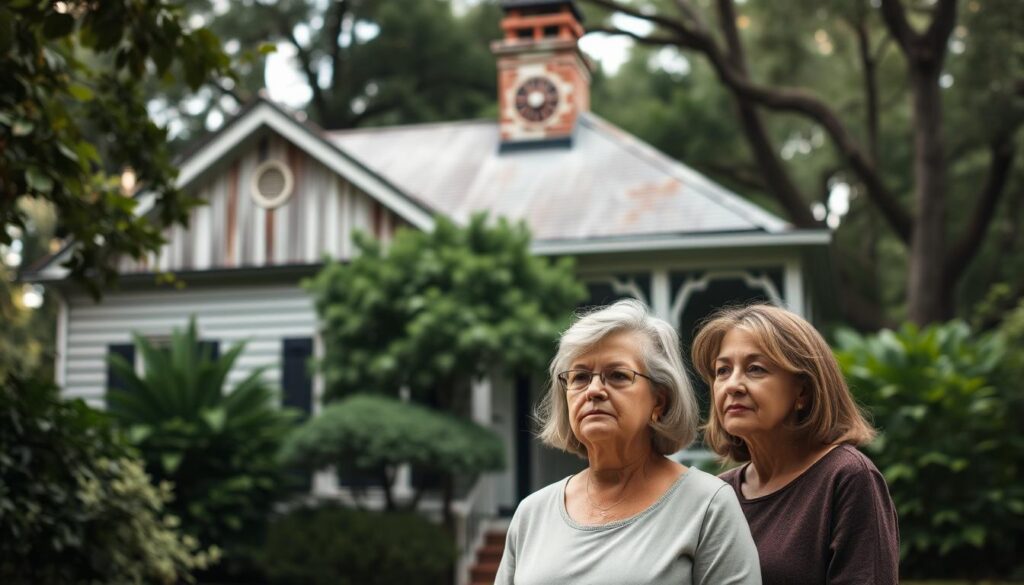
Homestead and Medicaid Eligibility
Understanding how homestead property impacts Medicaid eligibility is crucial for effective planning. As we navigate the complexities of Florida estate planning laws, it’s essential to recognize the role that homestead property rights play in Medicaid planning.
“The homestead exemption can significantly affect an individual’s Medicaid eligibility,” says an expert in estate planning. “It’s not just about protecting your home; it’s about ensuring that you’re eligible for the care you need.” This highlights the importance of considering homestead status in Medicaid planning.
How Homestead Affects Medicaid Planning
Homestead property is treated differently under Medicaid rules compared to other assets. In Florida, a primary residence can be considered an exempt asset, meaning it doesn’t count towards the Medicaid asset limit, provided it is valued at or below a certain threshold. However, this exemption comes with conditions, and understanding these is key to effective Medicaid planning.
To protect your homestead while planning for Medicaid, consider the following:
- Ensure your home is properly titled and that you have the appropriate documentation.
- Understand the equity limits for your primary residence.
- Consider strategies for managing excess equity.
Protecting Your Home from Medicaid Liens
One of the concerns for homeowners is the potential for Medicaid liens against their property. A Medicaid lien is a claim against your property to recover the costs of Medicaid benefits you’ve received. However, there are strategies to protect your homestead:
Strategies for Protection:
- Transfer your home to a spouse or other protected individuals.
- Use a Medicaid-compliant annuity to help with spend-down requirements.
- Consider establishing a trust, under certain conditions.
“Protecting your home from Medicaid liens requires careful planning and a thorough understanding of Florida’s Medicaid rules,” emphasizes the importance of professional guidance in this area.
By understanding how homestead affects Medicaid eligibility and taking proactive steps, you can protect your home and ensure you’re making the most of the benefits available to you.
Challenges and Risks in Homestead Disputes
The complexities of homestead laws in Florida can sometimes lead to disputes among heirs and family members. Understanding these challenges is crucial for homeowners to protect their Homestead property rights.
Disputes over homestead property often involve intricate legal issues, including interpretations of wills, trusts, and Florida inheritance laws. These disputes can be emotionally taxing and may end up in Florida probate court.
Common Legal Disputes Over Homesteads
Some common legal disputes over homesteads include:
- Disagreements among heirs regarding the distribution of homestead property
- Challenges to the validity of wills or trusts related to homestead property
- Conflicts between surviving spouses and other beneficiaries
- Disputes over the management and maintenance of homestead property
Solutions for Resolving Disputes
Resolving homestead disputes requires a careful and multi-faceted approach. Some potential solutions include:
- Mediation: Engaging a neutral third-party mediator to facilitate discussions among disputing parties.
- Clear Estate Planning: Ensuring that estate plans are clear, comprehensive, and legally sound.
- Seeking Professional Advice: Consulting with attorneys who specialize in Florida probate law and homestead property rights.
By understanding the common legal disputes and potential solutions, homeowners in Florida can better navigate the complexities of homestead laws and protect their property rights.
Planning for Homestead Assets in Estate Planning
For Florida homeowners, incorporating homestead assets into estate planning is a critical step in securing their legacy. Effective estate planning involves considering homestead assets and understanding the strategies for including homestead property in wills and trusts.
Strategies for Including Homestead in Wills
Including homestead property in a will requires careful consideration of Florida estate planning laws. Homeowners should be aware of the specific rules governing homestead property, such as the limitations on devising homestead property to anyone other than a spouse or heirs.
Key considerations when including homestead in wills:
- Understanding the restrictions on transferring homestead property
- Ensuring that the will complies with Florida’s homestead laws
- Considering the implications for heirs and beneficiaries
As noted by estate planning experts, “Homestead property is treated differently under Florida law, and it’s crucial to understand these differences when drafting a will.”
“Homestead laws can significantly impact how your property is distributed after your passing. It’s essential to plan carefully to ensure your wishes are respected.”
Trusts and Homestead Property
Estate planning strategies often involve the use of trusts to manage and distribute assets, including homestead property. However, homestead property presents unique challenges when it comes to trusts.
Benefits of using trusts for homestead property:
- Potential avoidance of probate
- Flexibility in managing and distributing the property
- Possible protection from creditors
It’s essential to work with an experienced estate planning attorney to ensure that your homestead property is properly included in your trust, complying with Florida’s homestead laws and protecting your homestead property rights.
By carefully planning for your homestead assets, you can ensure that your estate is distributed according to your wishes, providing peace of mind for you and your loved ones.
Conclusion: Navigating Florida Homestead and Probate Rules
Navigating Florida homestead and probate rules can be complex, and seeking legal guidance is essential for ensuring that your rights are protected. As we have discussed, understanding Florida estate planning laws and the Homestead exemption in Florida is crucial for homeowners.
Protecting Your Legacy
Effective estate planning involves more than just understanding the laws; it requires careful consideration of your family’s needs and the protection of your assets. We recommend that homeowners seek professional advice to ensure their estate is planned effectively, taking into account the specific nuances of Florida homestead and probate rules.
Seeking Professional Guidance
By working with us at Barbara Pizzolato P.A, you can ensure that your homestead is properly protected and that your estate plan is tailored to your unique situation. This not only provides peace of mind but also helps to safeguard your family’s future. Understanding the intricacies of Florida homestead and probate rules is key to securing your legacy.